
Introduction To Garage Door Springs
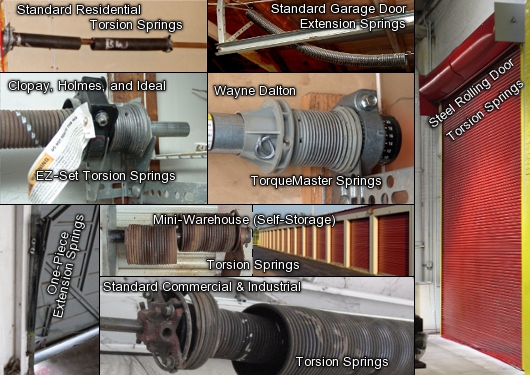
Garage door springs counterbalance the weight of the door to make it easy to open and close. They serve the same purpose of counterweights used to balance doors in centuries past as well as many doors today. For example, if a garage door weighs 100 pounds, a spring force of 100 pounds needs to pull against the weight of the door in order for the door to go up and down. Accomplish this through springs that either stretch or through special torque parts to assist in balancing the door.
If you're looking to learn what options exist for your garage door spring system, check out our introduction to garage door springs video.
Introduction To Garage Door Counterbalance
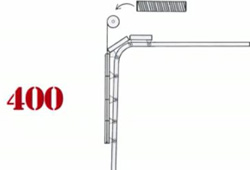
To safely repair garage doors it's necessary to understand the forces at work. In this video, you'll learn how the door system is counterbalanced, allowing the springs to offset the weight of the door throughout the door's travel.
Standard Garage Door Torsion Springs
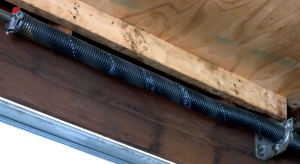
Standard residential torsion springs are found on a shaft above the center of the garage door. These springs typically come in 1 3/4", 2" and 2 1/4" inside diameters.
If you want to know how your torsion spring system works on your door, watch our introduction to garage door torsion springs video.
EZ-Set Torsion Springs
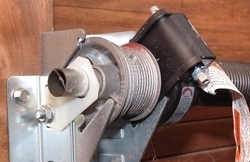
If your garage door has a broken EZ-Set spring, you have two basic options for restoring your door to its previous working order. The simpler and safer option is to keep your EZ-Set system. The other is to convert to the Standard Torsion Spring system.
Wayne Dalton TorqueMaster Torsion Springs
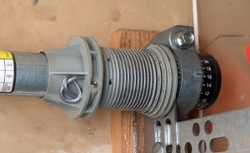
Wayne Dalton's TorqueMaster spring system uses unique hardware. The track radius is smaller than on most other doors, the cable drums are smaller, and the shaft has a unique shape. The torsion springs, instead of sliding over the shaft, fit inside the shaft.
Sectional Garage Door Extension Springs
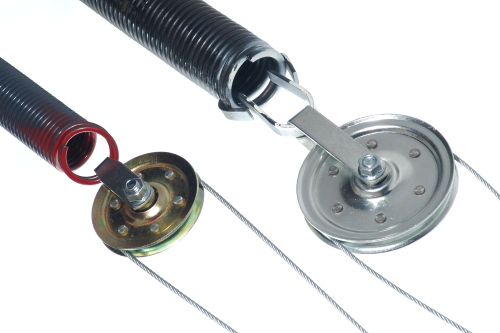
Extension springs have four characteristics: length, inside diameter, wire size, and type of end. Even though springs have these properties, manufacturers generally do not make their extension springs based on the dimensions you may find on your door. Every manufacturer has its own design for making springs.
One-Piece Garage Door Extension Springs
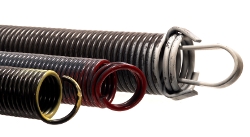
There are two main styles of one-piece springs. The first is the standard spring. This spring is used by a variety of door manufacturers. If the top of your door has rollers that move along a metal track that extends horizontally toward the back of your garage, you have standard one-piece springs.
Commercial and Industrial Torsion Springs
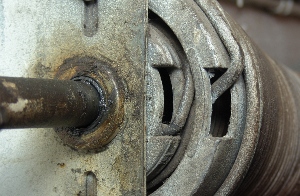
Commercial and industrial overhead doors range from weighing a few hundred pounds to over a thousand pounds. Vertical-lift and high-lift door systems are frequently used in commercial and industrial settings to maximize space. Follow this tutorial to measure your old spring(s) and find your new torsion springs to purchase.
Self-Storage Roll Up Door Springs
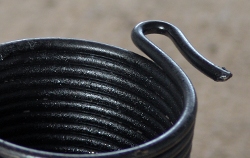
Self-storage roll-up doors operate in a similar manner to steel-rolling door springs. Like a steel rolling door, the curtain on these doors wraps around itself as the door opens. The primary difference, however, is that steel rolling doors are made of interlocking slats, while self-storage roll-up doors are just one piece of steel. While steel rolling doors are typically found in heavier commercial and industrial environments, self-storage roll-up doors are common in self-storage facilities.
Buy Self-Storage Roll Up Door Springs
Steel Rolling Door Torsion Springs

The torsion springs on steel rolling doors work the same way as other torsion springs in the garage door industry. When the door is closed, the spring is wound. The spring is secured to a spring anchor bracket on one end and to the shaft on the other. When the steel rolling door opens, the spring in the barrel supports most of the door weight. The remainder of this weight is lifted by the chain hoist or the operator.
How To Measure Garage Door Springs
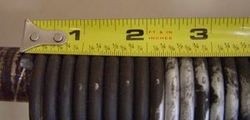
Measuring garage door torsion springs is precise, technical work. It often stumps experienced machinists, engineers, and garage door service technicians. In the door business, we often make mistakes ordering springs. The joke we make is that we'll use them as boat anchors, but you may not have a boat! Click to learn how to avoid ordering a boat anchor.
If you prefer video tutorials, check out our video on how to measure your garage door torsion springs.
How to Weigh a Garage Door
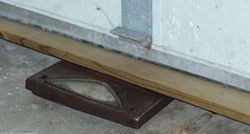
Often we have to start from scratch and re-engineer the torsion springs for an existing garage door. We do this by weighing the door and providing the drum information, door height, and track radius.
There are two ways to weigh a garage door. If you have winding bars and torsion springs on your garage door, you'll find this video helpful.
Here is a video on how to weigh a garage door with torsion springs.
If you have extension springs on your door, or if you don't have winding rods for a torsion spring door, you'll find these instructions helpful.
If you prefer videos, check out our video on how to weigh a garage door with extension springs or torsion springs.
Using Torsion Springs with Different Lifts
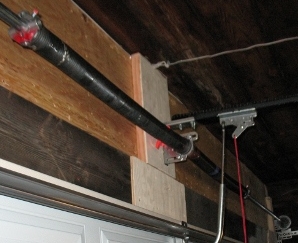
When possible, we recommend using matched torsion springs with comparable lift and cycle life. This will maximize the life of the torsion springs and not result in wasted cycle life, wasted dollars. This tutorial helps homeowners understand how they can utilize torsion springs with different lifts properly.
Maximizing Cycle Life on Unmatched Torsion Springs
We encourage our customers to buy torsion springs that are evenly matched for lift and cycles to maximize spring life. Some garage door springs may have the proper lift, but the cycle rating may differ.